Atlantic hurricane season runs from June 1 through November 30, and on this stretch of coast the part that matters most is mid-August through late October. If you own a pool here, there is a short list of things worth doing before a storm and a specific order for dealing with the aftermath.
We will start with the advice that needs to stop circulating.
Do Not Drain Your Pool
Every season this gets repeated, usually as common sense: a storm is coming with heavy rain, so empty the pool to make room. It is the single most expensive mistake a pool owner can make here.
The water in your pool is what holds the shell in the ground. Underneath it is groundwater pushing upward, and during a tropical system that water table rises fast. Remove the weight of the water and the pressure underneath can lift the shell, crack it, or push it clean out of the ground. A pool that pops is not a repair, it is a replacement.
Leave the water in. If major rainfall is forecast, lowering it by a foot or so is reasonable, but the pool stays substantially full. An overflowing pool is a minor inconvenience. A floated shell is a catastrophe.
Before the Storm
Raise the chlorine
Shock the pool a day or two ahead. You are about to get a large volume of unsanitized rainwater, a load of organic debris, and potentially several days without a working pump. Going into that with sanitizer already high buys you time and is the difference between a pool that is cloudy afterward and one that is green.
Cut the power and protect the equipment
Turn the pump, heater and salt system off at the breaker before the weather arrives. Equipment that is energized when it floods is far more likely to be destroyed, and a pump that loses prime and runs dry can burn out. Wrap the pump motor in waterproof covering if flooding is a real possibility, and leave it vented rather than sealed airtight.
Secure everything loose, but not in the pool
Furniture, toys, floats, the cleaner, planters, the grill, umbrellas. In high wind, loose deck items become projectiles aimed at your windows, your screen enclosure, and your neighbors.
Store them in a garage or shed. Do not throw them in the pool. This advice gets repeated constantly and it is bad: furniture chips plaster and tile going in and coming out, metal frames leave rust stains, and cushions foul the water badly enough to complicate the cleanup you are about to face anyway.
Leave the cover off
A pool cover is not storm protection. Wind gets under it and tears it, and debris loads it down and drags it into the pool. An uncovered pool is easier to clean out afterward than a shredded cover tangled on the bottom with a storm's worth of branches on top of it.
Trim back what is overhanging
Before the season, not the week of. Dead palm fronds and weak limbs over the pool are the bulk of what ends up in it. An afternoon of trimming in May saves hours of recovery in September.
Photograph everything
Take pictures of the pool, the deck, the enclosure and the equipment pad beforehand. If you end up filing an insurance claim, documented before-and-after condition makes the process dramatically easier.
After the Storm
Safety before anything else
Do not go near the equipment pad if there are downed lines nearby or standing water around it. Do not switch the system back on until you have checked whether water got into the pump motor, the heater or the control panel. Energizing flooded equipment destroys it and is genuinely dangerous. If there is any doubt, leave the breaker off and have it looked at.
Assume the pool water is contaminated and keep people out of it until it has been cleaned and properly sanitized. Storm runoff carries in whatever was on the ground, which after a serious system can include sewage.
Debris first, chemicals second
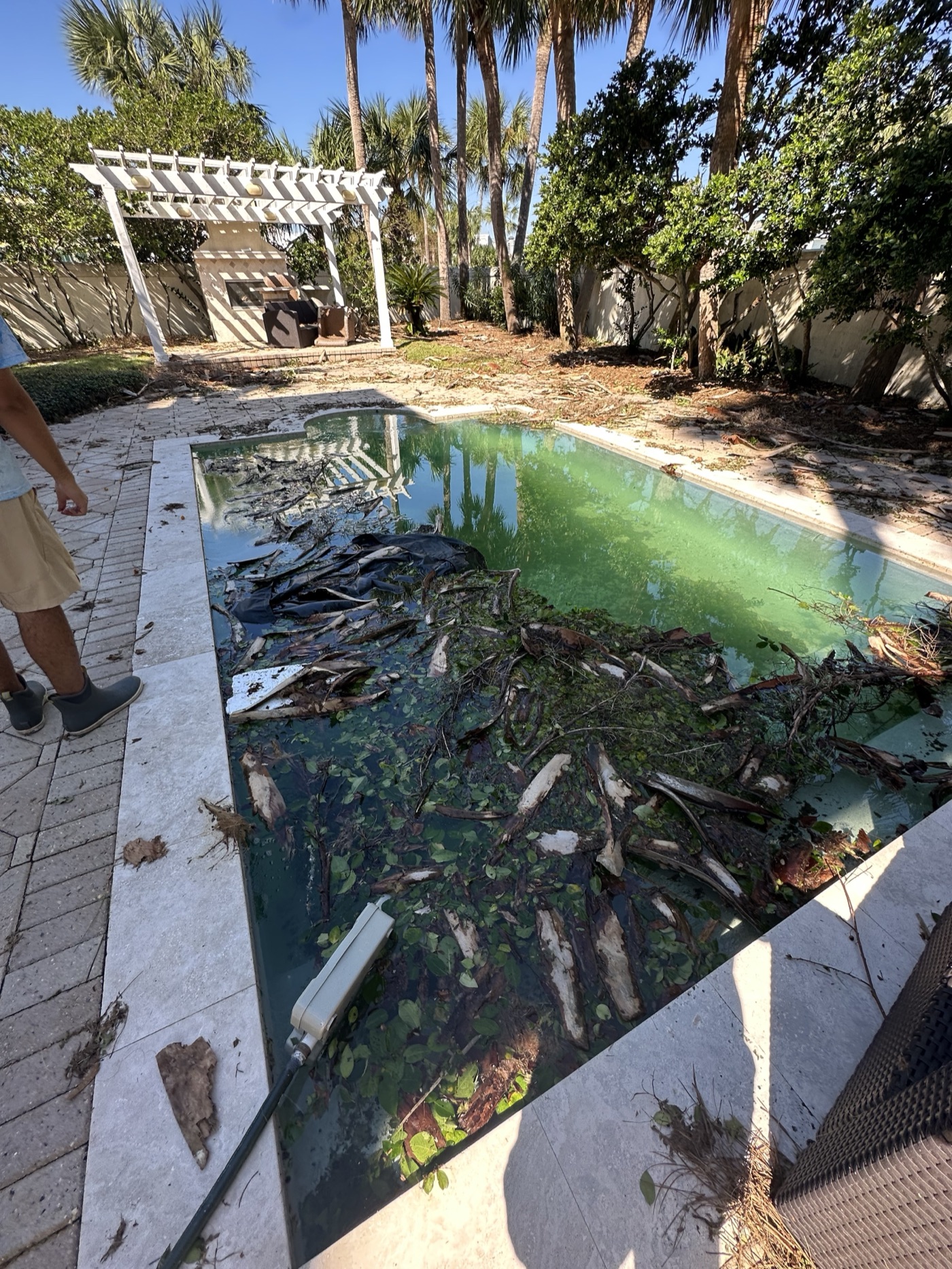
Everything organic in that water is consuming chlorine. Pull out branches, fronds, leaves and silt before you treat anything, and empty both baskets. On a bad one this takes real time and a heavy leaf rake, and the baskets will fill repeatedly over the following days.
Be careful with anything heavy resting on the bottom. Dragging a limb across plaster does more damage than the storm did.
Clean the filter before you run it hard
The filter is about to do the heaviest work of its year. Clean it first, and expect to clean it several more times over the next few days.
Then chemistry
Test everything. Storm water dilutes chlorine and drags pH and alkalinity down, so correct pH first, then shock the pool properly at dusk. Run the pump continuously, around the clock, until the water clears. Brush daily.
Expect cloudy before clear. Milky or grey water after shocking is progress, not failure. It means the organic load is dead and suspended, and the filter is now doing the work.
Check the equipment and the structure
Once things are running, watch for a pump that is noisy or not priming, a heater that will not fire, or a cleaner that stopped working. Look at the deck and coping for new cracks, and at the waterline for shifting. Flooding and saturated ground move things.
The Thing That Actually Determines How Bad It Is
After twenty years of doing this, the pattern is consistent. The pools that come through a storm needing a day of cleanup are the ones that went into it balanced, with a clean filter and nothing overhanging the water. The ones that need a full green to clean recovery are the ones that were already behind before the first band came through.
Storm preparation is mostly ordinary maintenance done on schedule, plus an afternoon of sensible precautions.
If you would rather have someone handle both ends of it, that is the job. WittCo Pools prepares and recovers pools across Destin, Miramar Beach, Santa Rosa Beach, Sandestin, Fort Walton Beach, Navarre and Crestview. Call (850) 660-3394 or request a free quote.